Thinking about a remodel, addition, or ADU in Del Mar and hearing you might need a Coastal Development Permit? You are not alone. The coastal rules can feel complex, especially on bluff-top or near-shoreline lots. In this primer, you will learn when a CDP is likely required, how the review works, realistic timelines, and what to prepare before you hire your design team. Let’s dive in.
What is a Coastal Development Permit?
The California Coastal Act requires a Coastal Development Permit for most development in the Coastal Zone. In Del Mar, the city issues CDPs under its certified Local Coastal Program, and decisions must be consistent with those local policies. The California Coastal Commission keeps some jurisdiction and can hear appeals in specific situations.
“Development” is defined broadly. It can include new construction, additions, exterior alterations, grading, shoreline protection, vegetation removal, and some demolition. Interior-only work with no exterior change may not need a CDP, but you should confirm with Del Mar planning staff before you start.
Do you need a CDP in Del Mar?
You likely need a CDP if you plan to:
- Add floor area or increase massing, including second stories or room additions.
- Build new accessory structures that are visible from the shoreline or located on the beach, bluff top, or bluff face, such as garages, ADUs, pools, or decks.
- Grade, alter slopes, add or modify retaining walls, or affect bluffs.
- Install shoreline protection, including seawalls or revetments, which face heavy scrutiny.
- Demolish and reconstruct in a way that changes use, footprint, or massing.
- Remove trees or disturb sensitive habitat.
You may not need a CDP if you plan:
- Interior-only remodels with no exterior change, grading, drainage changes, or change in use.
- Minor maintenance and repair that do not alter the structure or site conditions.
- Small accessory items outside the coastal zone or below local exemption thresholds. Always confirm with staff.
Special cases to watch
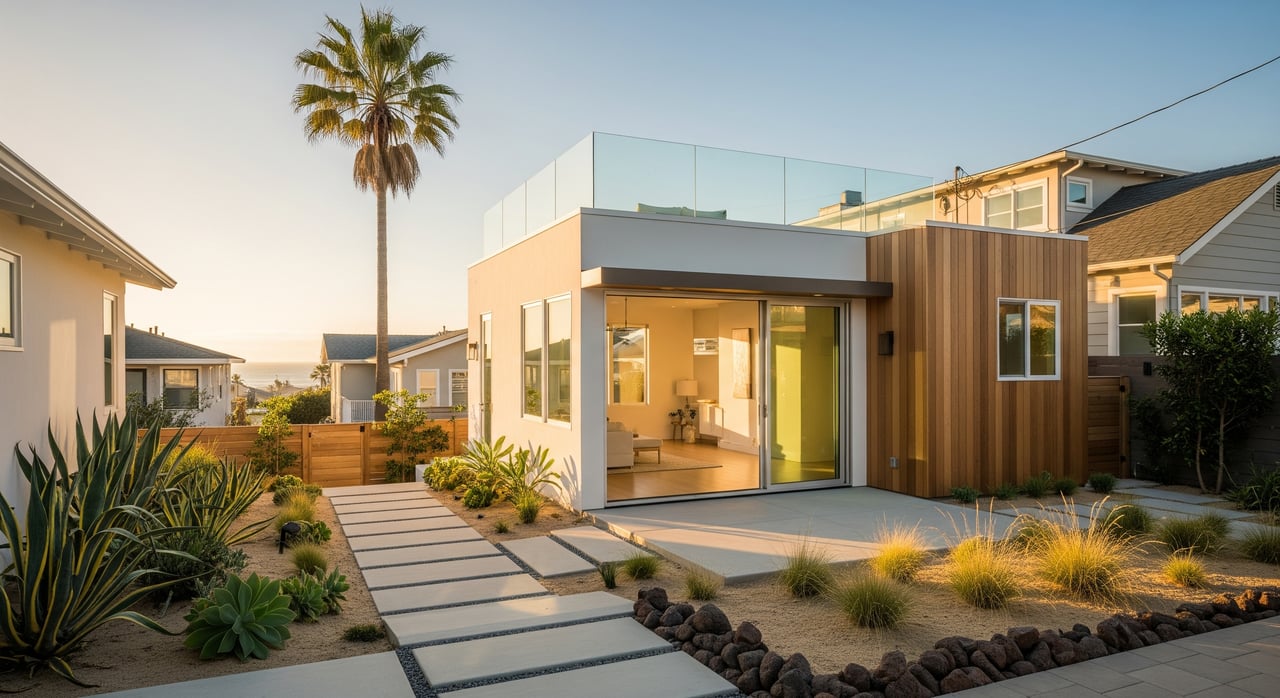
- ADUs. State ADU laws do not override coastal rules. ADUs in the coastal zone must still comply with Del Mar’s Local Coastal Program and coastal permitting requirements.
- Views and public access. Projects that could affect public views or coastal access paths often draw heightened review.
How the review process works
Start with a pre-application
A brief consultation with Del Mar planning staff is the smartest first step. Staff can confirm whether your property is in the coastal zone, identify overlay maps that apply, and flag likely reports such as geotechnical or biological studies. Early clarity can save months later.
What to submit
Typical submittals include application forms and fees, a site plan, floor plans, elevations, grading and drainage plans, a landscape plan, and photos. Many coastal sites also need technical reports, such as geotechnical or geologic analyses, drainage and stormwater plans, slope stability studies, biological assessments, tree reports, or visual analyses where public views are involved.
Environmental review under CEQA
The city must evaluate environmental impacts under the California Environmental Quality Act. Some small projects qualify for a categorical exemption. Projects in sensitive areas or those involving bluff alteration, shoreline protection, or potential public access impacts often require a more detailed study.
Notices, hearings, and decisions
Staff will review your plans for consistency with the Local Coastal Program and draft conditions of approval. Neighbor noticing is common. Some minor projects can be approved administratively. Additions, grading with technical reports, or more complex projects may require Planning Commission or City Council hearings.
Appeals
In some cases, local decisions can be appealed to the California Coastal Commission. Appeal periods are short. Ask planning staff about eligibility and deadlines if you think your project could be appealed.
Timelines you can expect
- Small projects with minor exterior changes: about 1 to 3 months, if no technical reports are required and staff can approve administratively.
- Moderate projects such as additions, ADUs, or grading with reports: about 3 to 6 months, including time to prepare studies and schedule hearings if needed.
- Major projects such as new homes, bluff stabilization, or seawalls, or those requiring CEQA or appeals: about 6 to 18 months or more.
These are general ranges. The most common delays come from revision cycles after staff review and the time needed to prepare geotechnical or biological reports.
Coastal overlays and hazards
Coastal overlays shape design and approvals in Del Mar. Here is how they commonly affect projects:
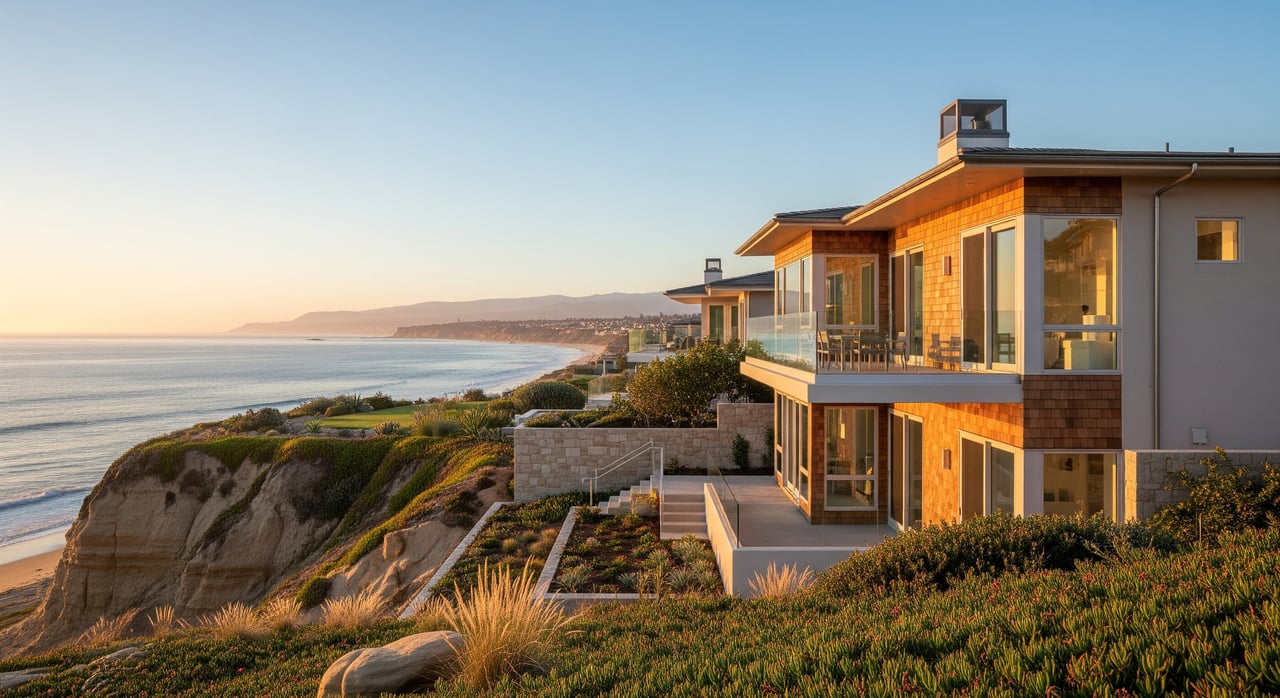
- Bluff or shoreline overlays. Expect bluff setbacks, limits on excavation and hard armoring, and geotechnical proof of stability and public safety.
- Wetland or habitat overlays. Removal of vegetation is restricted, buffers are required, and mitigation may apply.
- View corridors and public-access overlays. Massing, materials, and orientation often must reduce visual impact and protect public views.
- Floodplain and coastal flood overlays. Elevated foundations, flood-proofing, and sea level rise planning can be required.
Policies on height, massing, and visual resources often limit building height and require compatible materials that minimize visual prominence from beaches and public viewpoints.
Shoreline protection and seawalls
Hard armoring faces intense scrutiny. Approvals are generally limited and conditioned on clear necessity, minimal feasible armoring, and consideration of alternatives. Many projects are required to analyze non-armoring solutions first.
Sea level rise and erosion
You should expect to evaluate future sea level rise and potential bluff retreat. Many jurisdictions require long planning horizons to show the project remains safe and feasible without new shoreline armoring where it can be avoided.
Practical design impacts
- Setbacks and reduced buildable area often lead to smaller footprints or raised structures.
- Foundations may require deeper piles or piers and enhanced drainage or erosion controls.
- Landscaping can be limited to native palettes, and mitigation for vegetation impacts may be required.
What to prepare before hiring
Confirm your property’s status
Verify if your lot lies within Del Mar’s coastal zone and which overlay maps apply, such as bluff, floodplain, habitat, or public-access overlays. Ask the Planning Department for zoning and coastal maps and Local Coastal Program references.
Gather key documents
- Property deed and legal description
- Existing survey and topography, if available
- As-built plans and elevations
- Site and context photos, including public viewpoints and nearby coastal features
- Records of prior permits, easements, coastal permits, or enforcement history
Build the right team
Engage an architect with coastal and Local Coastal Program experience. For bluff or erosion risk, hire a coastal geotechnical and engineering consultant. If native vegetation or habitat may be affected, include a biological consultant. For complex projects or likely appeals, consider a coastal attorney or land-use consultant.
Ask smart questions
- What studies will our project likely require in Del Mar?
- How familiar is the team with Del Mar’s LCP and Coastal Commission practice?
- What milestones should we expect from pre-application to final CDP?
- What are typical added costs for required reports or mitigation?
Starter application checklist
- CDP application forms and fees
- Site plan, floor plans, elevations
- Grading and drainage plans with temporary and permanent controls
- Geotechnical report with bluff stability, erosion, and setback recommendations
- Biological assessment or tree report if vegetation is present
- Visual simulations or view studies if public views could be affected
- CEQA documentation, including checklists or exemption support if appropriate
Common pitfalls and risk tips
- Incomplete submittals. Missing technical reports or insufficient plans cause quick delays.
- Underestimating studies. Geotechnical and biological work can take longer than you expect.
- CEQA surprises. Projects with potential impacts can face extended environmental review.
- Appeals. Some approvals are appealable to the Coastal Commission and can add months.
Risk management tips:
- Start with a pre-application meeting to confirm constraints and required studies.
- Hire coastal-experienced consultants before you submit.
- Budget time and cost contingencies for additional studies and revisions.
- Consider alternatives early, such as smaller footprints, relocated structures, or non-armoring erosion strategies.
- Keep thorough records of any prior coastal permits or shoreline protection approvals.
After approval
CDPs often include conditions. You may see mitigation measures such as native planting or habitat replacement, construction best practices for erosion control, and requirements to implement geotechnical recommendations. If public access is affected, access-related conditions can apply. Most permits have time limits to begin work or secure building permits, so confirm your exact deadlines with the city. Some approvals also require post-construction monitoring or bonds to ensure mitigation is completed.
Key takeaways
- The CDP is a separate approval and is common in Del Mar’s coastal zone.
- Early staff input and the right technical team help you avoid costly redesigns.
- Expect design limits for bluffs, views, habitat, and flood risk.
- Plan realistic timelines and build in contingencies.
Ready to discuss how your permit path and design choices could affect resale, value, and market timing? Connect with Adriana Prieto for a focused, confidential consultation tailored to Del Mar and the San Diego coast.
FAQs
Do interior remodels in Del Mar need a CDP?
- Usually no, if there is no exterior change, grading, drainage change, or change in use. Confirm with Del Mar planning staff before starting work.
Are seawalls or revetments easy to approve in Del Mar?
- No. Shoreline armoring is heavily regulated and often discouraged. Approval requires strong geotechnical justification and proof that alternatives are infeasible.
How long does a Del Mar CDP take for a typical addition?
- Many additions with required reports take about 3 to 6 months. Larger projects or those with CEQA or appeals can take 6 to 18 months or longer.
Do state ADU rules waive coastal permitting in Del Mar?
- No. ADUs in the coastal zone must comply with Del Mar’s Local Coastal Program, and coastal permitting requirements still apply.
What can delay my CDP most?
- Incomplete applications, revision cycles after staff review, extended CEQA analysis, time to prepare geotechnical or biological reports, and potential appeals can all extend the timeline.